More Tools Than Ever—Why Photography Still Comes Down to Seeing
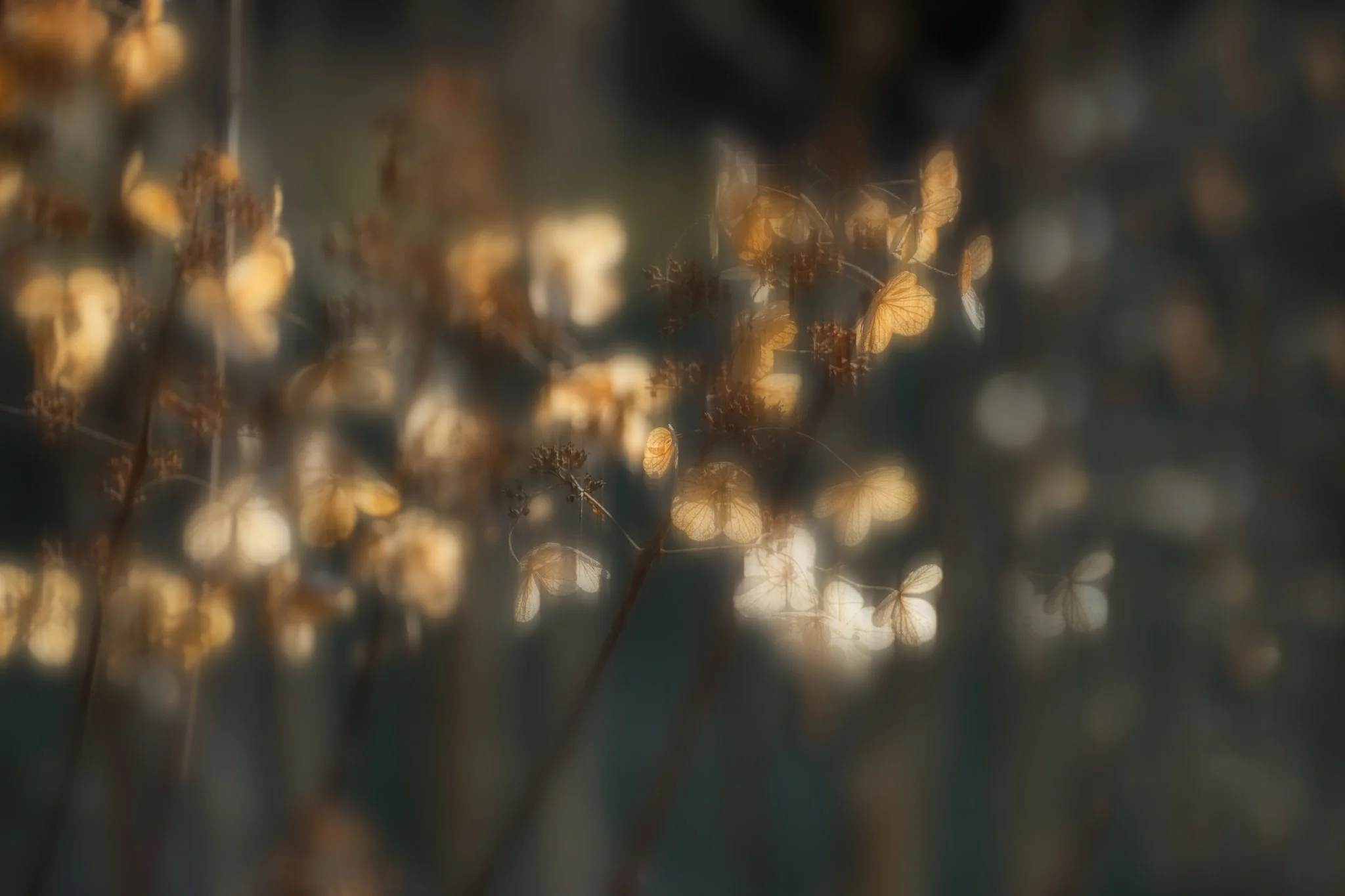
Winter light! The images in this post were all taken late in the afternoon on a cold winter day, out in the garden. The light was beautiful, and the dried flowers made an interesting subject.
I’ve been thinking a lot about the tools we have at our fingertips as photographers—and the constant pull to make it all easier: the right gear, the perfect edit, the next little gadget that promises to smooth the process. Between smarter cameras, better macro options, focus stacking that feels almost effortless, and editing tools that can tidy a frame in seconds, it’s both exciting and, honestly, a bit overwhelming.
But the more I reflect on my own work—and the images I’m often asked to review, including my students’—the clearer this becomes: the photographs people return to aren’t the ones with the most tools applied. They’re the ones with a feeling. Light. Gesture. A touch of mystery. They happen when we set the “things” aside long enough to really see—when we get up early for sunrise, or stay out in the cold for that winter backlighting. Those moments are what keep me practicing, even after nearly 24 years.
So yes, let’s talk about the tools—they’re fun. But let’s keep them in their place: tools are the paintbrush, not the painting.
The “new normal” toolbox
1) In-camera abstraction is still the fastest path to “painterly”
If you love abstract images, the big shift isn’t a brand-new trend—it’s that more photographers are getting brave about leaving realism behind. I see it in classes I teach and in working with many camera clubs.
Two “ old-school” techniques are leading the way:
Intentional Camera Movement (ICM): slow shutter + gentle movement to create brushstroke-like petals and stems.
Multiple exposures: layering shapes and tones in-camera so the final image feels dreamlike rather than documentary.
These techniques work because they are simple and create in-camera beauty without all the hassle of extra tools!
Check out my full post on ICM if you are new to this method!
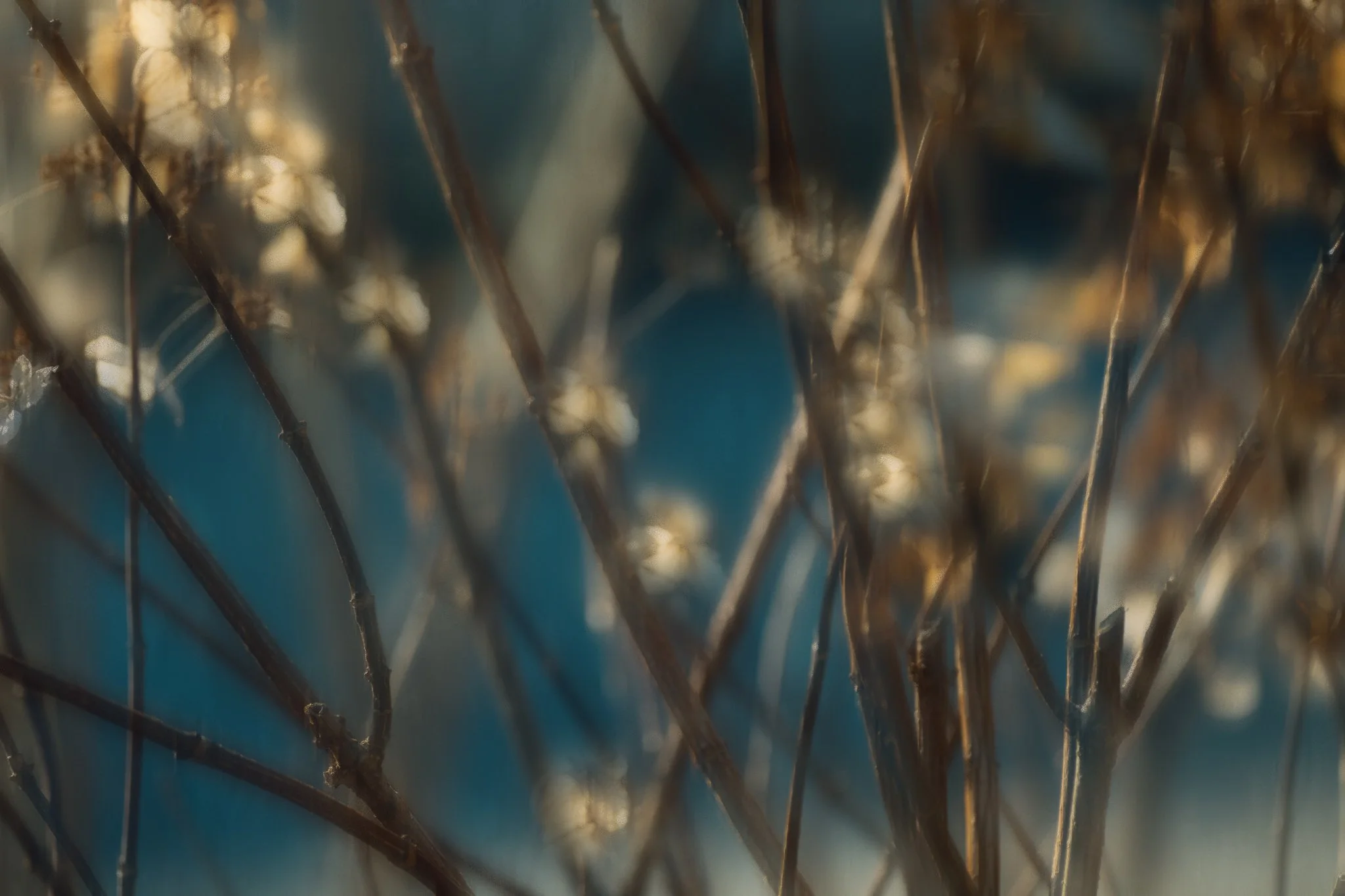
Camera movement for an abstract view.
2) Focus stacking is back (and it’s gorgeous… when it’s restrained)
For close-up flowers, the desire for detail is understandable. Focus stacking can create that “botanical illustration” clarity—petals, pollen, texture, the whole little universe in one image.
The catch: stacking can get crunchy or hyper-processed. If everything is equally sharp, the photo can lose depth and feel clinical.
A better rule: stack when the subject is about structure (seed heads, spirals, layered petals). Skip it when the image is about mood (soft light, atmosphere, gesture).
Mix the two: this is my preference. I love to focus stack and then soften the edges to give it the best of both worlds. So shoot a couple images of the critical parts of the scene and then combine in Photoshop. Once the images are combined, you can use a blur tool or brushes to soften the edges of the flower or scene to bring it back to “normal.” This gives the best of both worlds and makes the image look natural.
3) AI cleanup is becoming mainstream (but it can erase the heart if you let it)
Editing has changed fast. In Lightroom, Generative Remove can remove distractions (labels, bright twigs, stray stems) using Adobe Firefly-powered generative AI.
And Lens Blur can add adjustable blur/bokeh after the fact—useful when you want separation but didn’t get it in-camera.
There’s also Reflection Removal in Adobe Camera Raw for shooting through glass.
These tools are powerful, and they can absolutely help. But they also tempt you to “perfect” the life out of a photograph.
So I use a simple boundary:
I’ll remove distractions that weren’t part of the moment (a plant tag, a bright litter speck, a harsh highlight on glass).
I won’t remove the character of a space (a tiny blemish, a petal nick, the natural mess that makes the scene honest).
Use the tools when it distracts from the scene. Add lens blur to soften a background, but don’t take it all the way to 100%.
Using just a little of these powerful tools goes a long way!
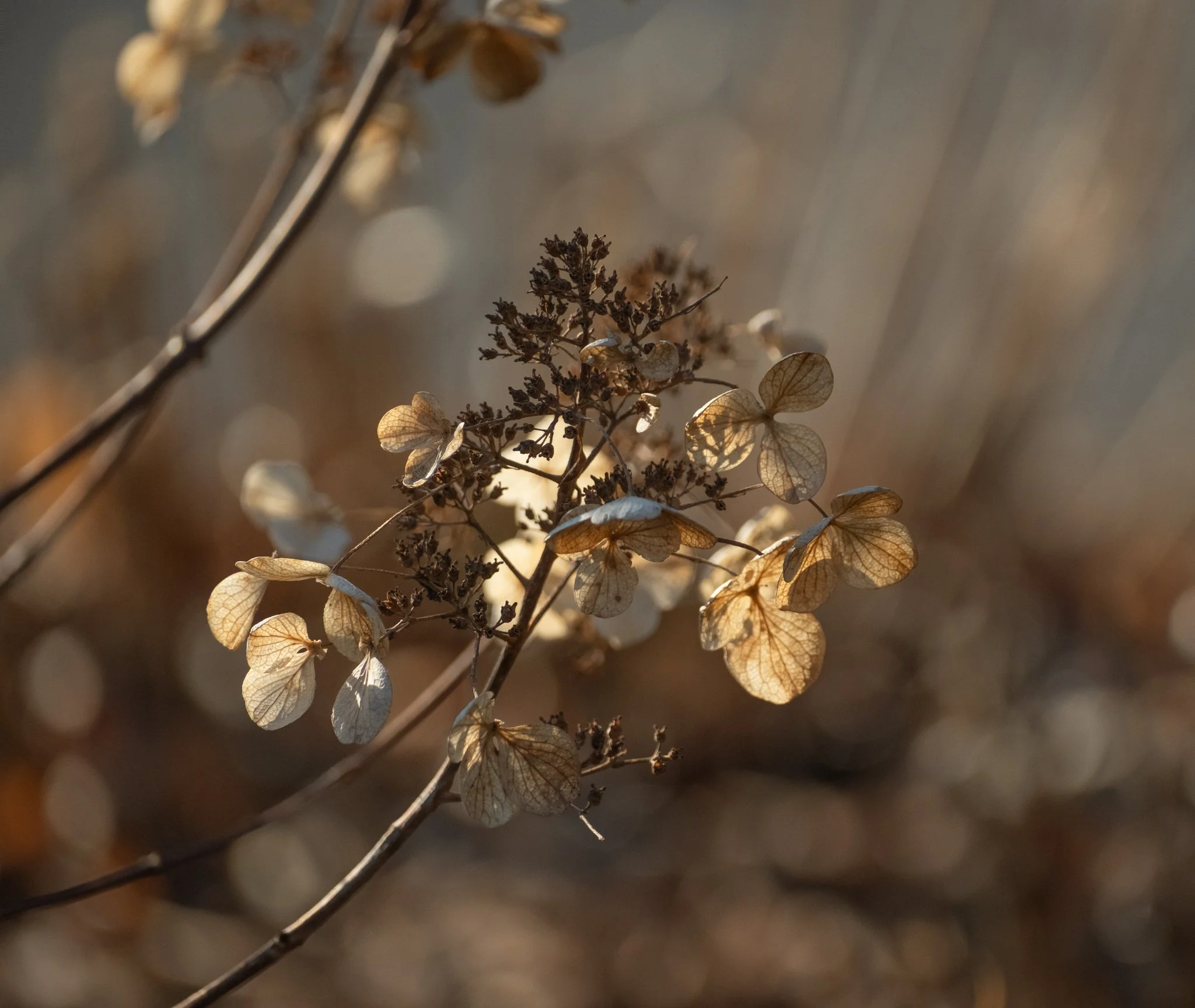
In camera blur and bokeh using a 70-300 lens, shooting in the golden light
3 ways to impact your image in camera vs using tools!
When a photo feels flat, the answer is almost never “more gear.” It’s usually one of these:
1) The frame has no key story
The best images are opinionated. They choose:
one subject
one light
one mood
If your frame says “look at everything,” it often reads like “look at nothing.”
Quick fix: before you click, ask: What is this photo actually about—color, shape, light, or texture? Pick one. Focus on that one element. For me, many times I am first drawn to the light, and then I frame the subject around the light. Even a dead branch with stunning winter light can be a beautiful image.
2) The background is doing too much
Distracting backgrounds can be fixed in programs like Photoshop, but learning some simple ways to address them in-camera leaves you with a natural image. Yes, there are times you have to “fix” it in Photoshop. But controlling what is in camera is the first step.
Quick fix: We can control the scene through composition, camera aperture, and movement to avoid shadows or harsh light. We can also control the background. Most backgrounds are solved by position, not Photoshop. Try shooting at a lower F-stop, like F4 or lower, to get a smooth, soft background. Combine a soft background with a sharp, focused image to get the final look. The power is in what you see through the lens - it doesn’t always have to be editing that “fixes” the image.
3) The image explains everything
Often, we shoot “snapshots” and capture a moment in time. But what if we took that same scene and turned it into a mystery?
Images are at their best when they’re not fully revealed—when you leave room for the viewer to finish the story. You can do this by shooting through something, using ICM photography, or composing with leading lines. Adding abstract elements gives the viewer pause, guides the eye around the image, and allows the viewer to interpret the scene. It is a fun way to shoot, especially during cold winter days.
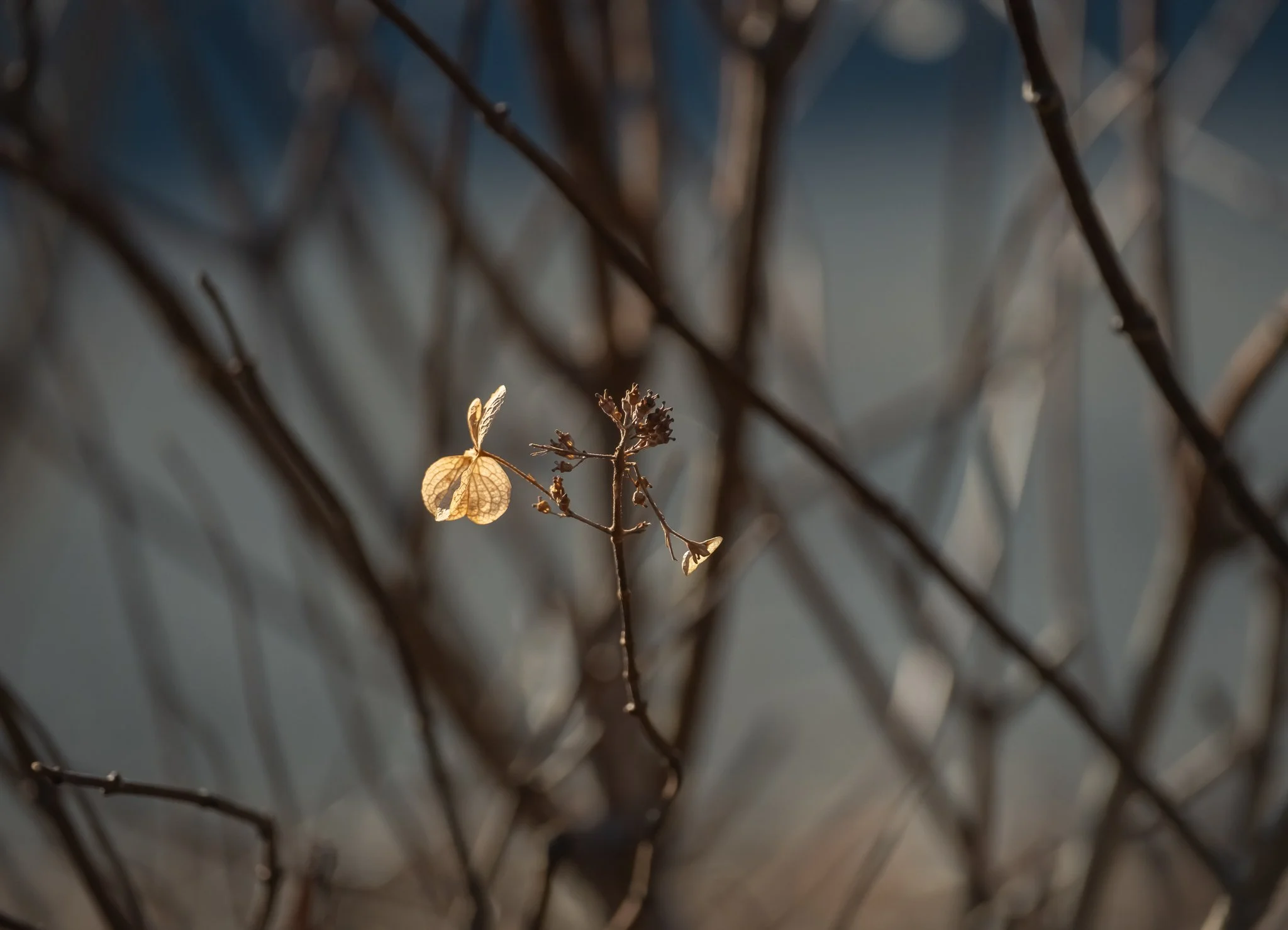
Simplify the subject - winter light, all in camera using a long lens 70-300MM
Final thought: use the tools, but stay loyal to the feeling
I use many of the new tools. I am always going to check out the new gear, but not always buy. Of course, I enjoy the update, remove tools, and spot reduction. But I try to treat them the way I treat my garden: with a little restraint. :)
A garden doesn’t need every plant. A photograph doesn’t need every technique.
The goal isn’t to show what you can do.
It’s to make something that feels like standing there—light on petals, wind in the stems, and a moment you don’t want to forget. If you are new to creative photo tools, check out my homepage for free tools or my Photo Youtube channel.
Happy Shooting in 2026!
